
Why Older Kingston Homes Struggle With Winter Comfort
Why Older Kingston Homes Struggle With Winter Comfort
The challenge of owning an older home and what to do about it
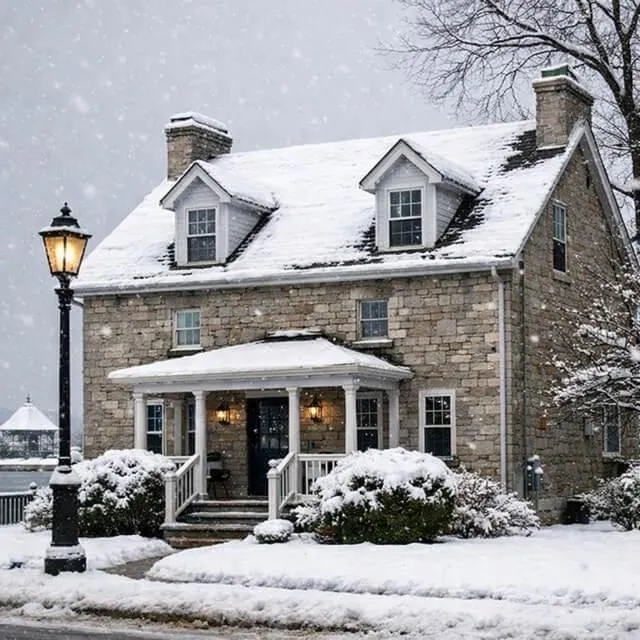
Kingston’s Housing Legacy: Built for a Different Era
Walk through older neighbourhoods in Kingston and you’ll see history everywhere. Thick limestone walls; tall Victorian windows; brick semis built before World War II; charming century homes near downtown. These houses were built with craftsmanship and pride — but they were not built with modern insulation standards in mind.
Most of these homes were constructed long before energy efficiency codes required attic R-50 insulation, air sealing details, or basement vapour barriers. Back then, fuel was relatively cheap and expectations for comfort were lower. A chilly upstairs bedroom in January was simply “normal.” Homes were designed to survive winter — not necessarily to feel evenly warm from floor to ceiling.
Today, expectations are different. Families want consistent indoor temperatures; lower heating bills; fewer drafts; and less condensation on windows. When those expectations meet an older building envelope, the result is often frustration.
Understanding why these homes struggle in winter begins with one simple idea: heat is always trying to escape. And in older Kingston homes, it often finds plenty of ways out.
How Heat Actually Moves Through a Home
Before we talk about insulation upgrades, it helps to understand what’s really happening inside the walls and ceilings during winter.
Heat moves in three main ways: conduction; convection; and radiation. In plain language, that means it moves through materials, through air leaks, and through temperature differences. In winter, warm indoor air naturally rises. That rising air presses against the ceiling and attic floor. If the attic insulation is thin — or missing in places — heat slips upward and out.
At the same time, cold outdoor air is pulled in through cracks in the lower parts of the house. This “stack effect” creates a loop: warm air escapes at the top; cold air enters at the bottom. The bigger the leaks, the stronger the cycle.
In many older Kingston homes, insulation and air sealing were never designed to control this movement. As a result, rooms feel drafty; floors feel cold; and the furnace runs longer than it should.
Once you understand that heat behaves like water flowing downhill — always seeking a path — the comfort problems start to make sense.
Attics: The Biggest Source of Heat Loss
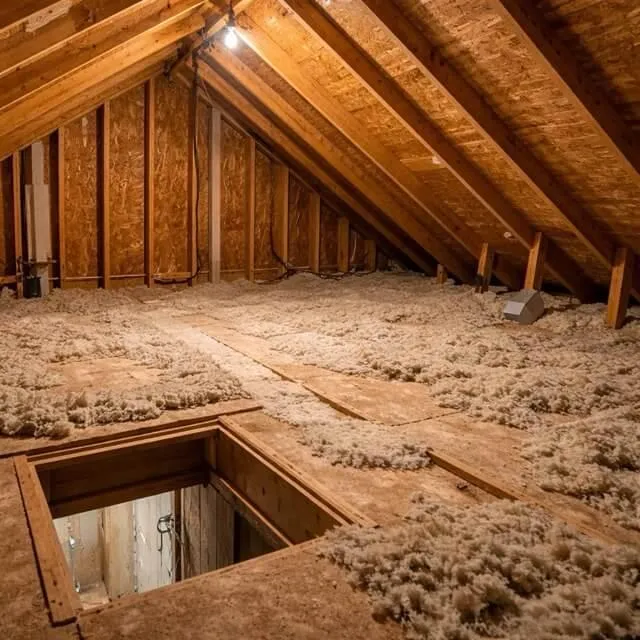
If there is one area where older Kingston homes commonly struggle, it is the attic.
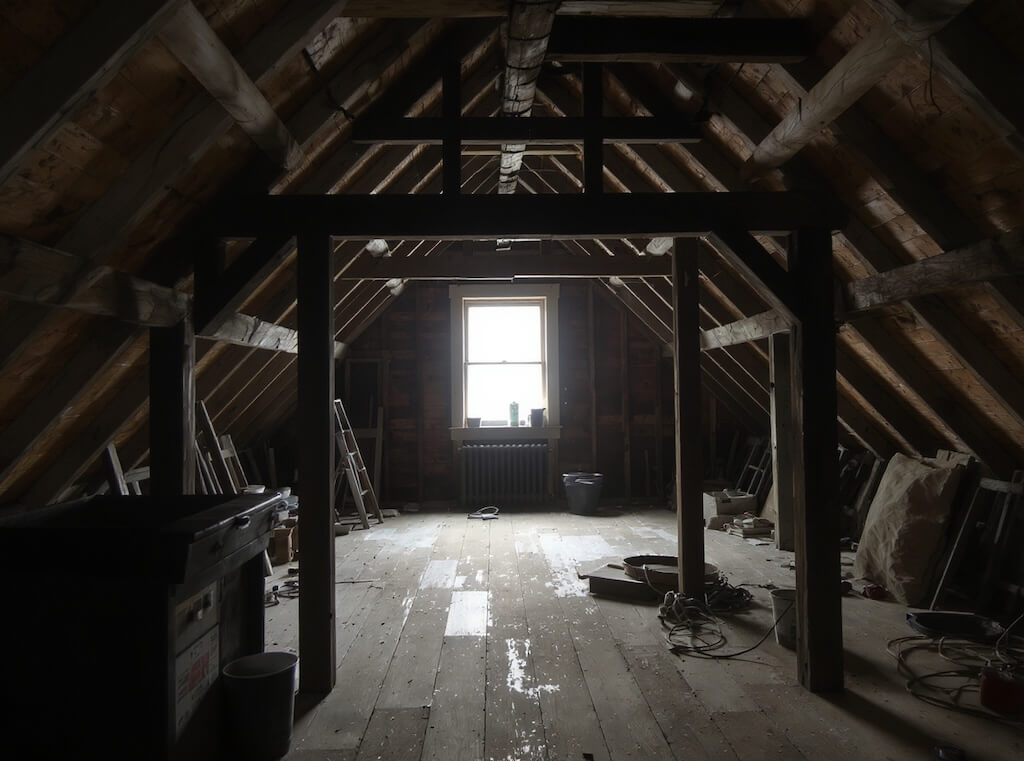
Many homes built before the 1980s have far less insulation than today’s standards recommend. Some have only a few inches of fiberglass batts; others have aging blown insulation that has settled over time. Gaps around light fixtures, plumbing stacks, and attic hatches often allow warm air to leak directly upward.
When attic insulation levels are low, ceilings become cold surfaces. That leads to uneven temperatures between floors and can contribute to ice dams along roof edges — a common winter problem in this region.
Upgrading attic insulation is often one of the most effective improvements for winter comfort. By increasing R-value and sealing air leaks at the same time, homeowners can dramatically reduce heat loss. The result is usually noticeable: warmer upstairs rooms; less furnace cycling; and fewer cold drafts.
Basements and Crawl Spaces: Cold Air Entry Points
While heat escapes at the top, cold air usually sneaks in at the bottom.
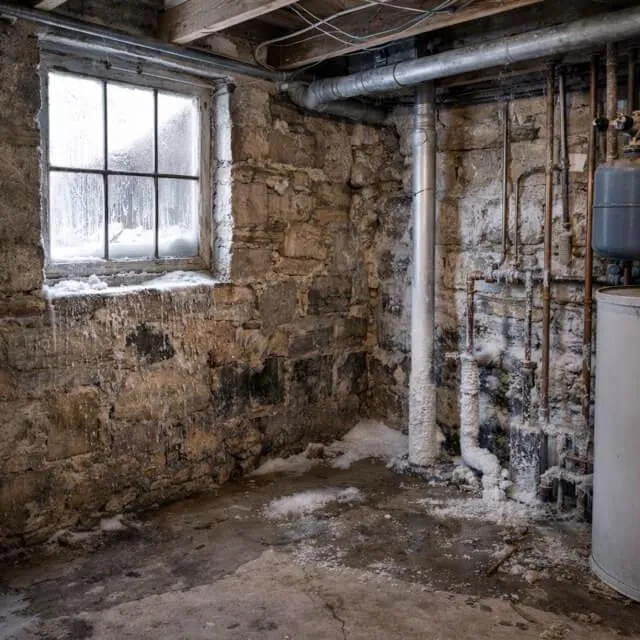
Older foundations — especially stone or early concrete block — were rarely insulated on the interior. Rim joists were left exposed. Basement windows may be single-pane. Small cracks around sill plates and service penetrations allow outside air to filter in.
The effect is subtle but powerful. Cold air pools along basement floors and slowly rises into living areas. Main-floor floors feel cold; rooms above uninsulated crawl spaces feel uncomfortable; and humidity can increase.
In Kingston’s climate, basement insulation and air sealing are often overlooked. Yet addressing these lower-level entry points can significantly improve comfort throughout the house. Insulating foundation walls, sealing rim joists, and controlling air leakage at the base of the structure helps stabilize indoor temperatures and reduce that “cold feet” feeling many homeowners describe.
Moisture Movement and Winter Condensation
Comfort is not only about temperature. Moisture plays a major role in how a home feels — and how it performs.
In winter, warm indoor air holds moisture. When that air leaks into cold cavities — like attics or exterior walls — condensation can form. Over time, this can lead to mold growth; insulation degradation; and even structural damage.
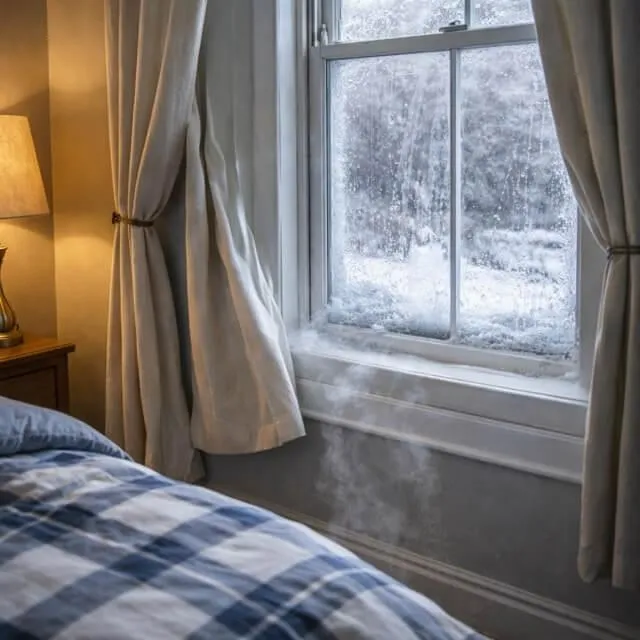
Older homes were often built without continuous vapour barriers or proper air sealing layers. As a result, moisture control can be inconsistent. Homeowners might notice frost in the attic; peeling paint; damp basement walls; or condensation on windows.
Improving insulation without addressing air leakage can sometimes worsen these issues. That’s why understanding how air and moisture move together is critical. A thoughtful approach considers both thermal performance and moisture management — ensuring the home stays dry as well as warm.
Drafts, Pressure Imbalances, and Uneven Rooms
Many Kingston homeowners describe the same winter experience: one room feels cozy; another feels like a refrigerator.
This uneven comfort often traces back to air leakage and pressure differences. When warm air escapes from upper levels, it creates negative pressure inside the home. Cold outdoor air is pulled in through the path of least resistance — often around electrical outlets, baseboards, or poorly sealed windows.
The result can feel like invisible wind moving through the house. Even if the thermostat reads 21°C, certain areas feel colder because air is moving across surfaces and skin.
Air sealing measures — particularly in attics and basements — can dramatically reduce these pressure-driven drafts. Combined with proper insulation levels, they help create a more stable indoor environment where temperatures remain consistent from room to room.
Rising Energy Costs Expose Old Weaknesses
Decades ago, inefficiencies were tolerated because energy was inexpensive. Today, heating costs are a major household expense.
When insulation levels are low and air leakage is high, furnaces must work harder and longer to maintain temperature. This leads to higher gas or electricity bills; more wear on heating equipment; and greater environmental impact.
For many homeowners in Kingston, winter energy bills have become the wake-up call. A house that seemed “fine” when energy was cheap now feels expensive to operate.
Improving insulation and air sealing is not simply about comfort — it is about reducing long-term operating costs. Well-targeted upgrades often pay for themselves over time through lower heating expenses and improved home durability.
Why Small Fixes Often Aren’t Enough
It is tempting to treat symptoms rather than causes. Adding weatherstripping to a door; placing plastic over windows; buying a space heater for a cold room. These measures can help temporarily — but they rarely solve the underlying issue.
If attic insulation is below recommended levels, or if significant air leakage exists at the top and bottom of the home, surface-level fixes will only go so far.
Meaningful improvement usually begins with a broader look at the building envelope. Where is heat escaping? Where is cold air entering? Where is moisture accumulating? Once those patterns are identified, targeted upgrades can be prioritized.
A strategic approach avoids wasted spending and ensures that improvements work together rather than against each other.
The First Step Toward Winter Comfort
Older Kingston homes have character and durability. Many have stood for more than a century. But they were built for a different set of assumptions about energy and comfort.
Improving winter comfort starts with understanding how heat and air move through the structure. Attics, basements, and hidden cavities play a larger role than most people realize. When insulation levels are increased and air leakage is controlled, the change can be transformative.
Rooms feel warmer without raising the thermostat. Floors feel less cold. Condensation decreases. Heating systems run more efficiently.
The goal is not to erase the charm of an older home. It is to bring its performance closer to modern expectations while respecting its structure.
For homeowners who are tired of cold drafts and high heating bills, understanding the building science behind these issues is the first step. From there, improvements become practical rather than mysterious — and winter becomes something to enjoy, not endure.
Is your home losing heat, feeling drafty, or harder to keep comfortable?
Helping Kingston Homeowners





INSULATION SOLUTIONS
Heat Loss & Ice Dam Solutions
Heat Loss & Ice Dam Solutions
Drafty Rooms & Uneven Temperature
Cold Floors & Basement Comfort
Cold Floors & Basement Comfort
Drafty Rooms & Uneven Temperature
LINKS
This website is operated by Joe Ramsay and Associates Inc. We are not an insulation contractor. We provide information and connect homeowners with independent local service providers. We may receive compensation from service providers for introductions made through this site.