
h1-Header here: 5-10 words
Choosing the Right Insulation for Your Kingston-Area Home
A practical guide to insulation types and best-use applications for homes in Greater Kingston and the surrounding Lake Ontario region.

Insulation in the limestone city
Canada's insulation needs vary enormously from coast to coast, and even within Ontario, what works in mild southern regions doesn't always serve Kingston well. Sitting at the northeastern tip of Lake Ontario, Kingston occupies a climatic middle ground that shapes every insulation decision a builder or homeowner faces. Winters are cold and persistent, with average January temperatures hovering around -8°C to -11°C and frequent wind chill events pushing the felt temperature well below -20°C. Lake-effect moisture from Lake Ontario and the St. Lawrence River corridor adds humidity in winter and amplifies summer heat and stickiness. The region sits in Climate Zone 6 under the Ontario Building Code, which mandates some of the more demanding effective R-value requirements in the province.
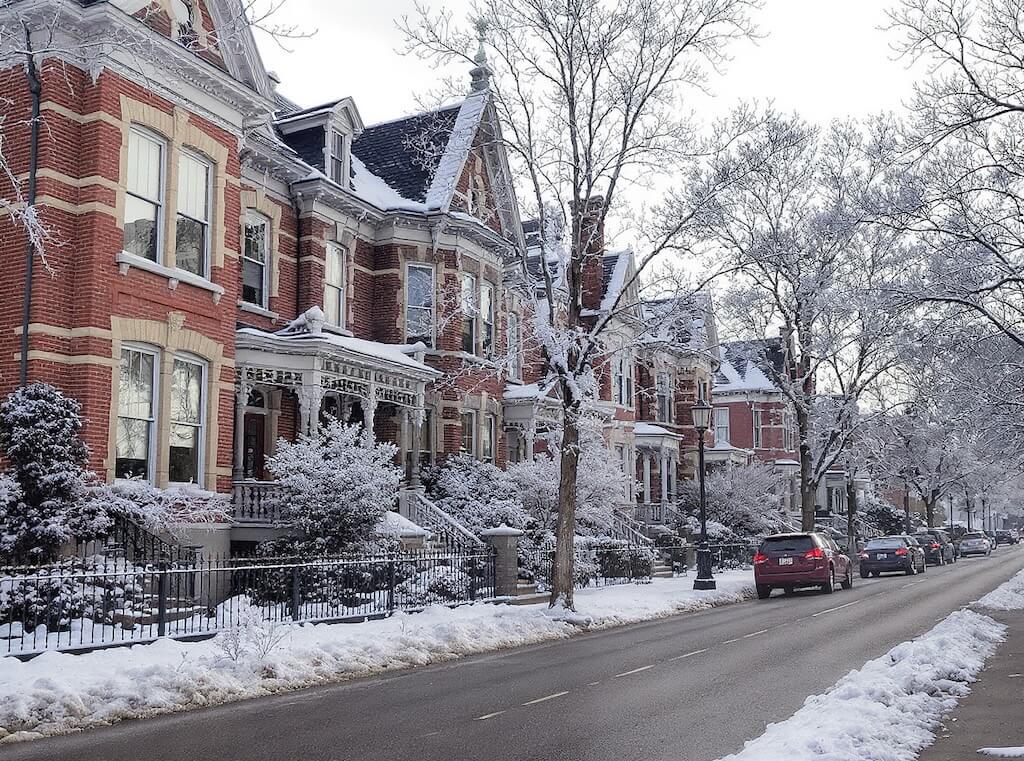
Kingston's housing stock adds another layer of complexity. The city has a rich inventory of 19th-century limestone and brick construction — the grand heritage homes of Sydenham Ward, the limestone farmhouses of Frontenac County, and the older workers' cottages of the inner city are all part of the local character. These solid-masonry structures present entirely different insulation challenges than the wood-frame subdivisions spreading across the west end in Cataraqui and Westbrook, or the infill semi-detached homes going up near downtown. Understanding what type of insulation works best — and where — requires matching the product to both the climate and the construction type.
Fiberglass Batt and Roll: The Standard Choice for New Wood-Frame Builds
In the new subdivisions spreading westward along Bath Road and out toward Amherstview and Loyalist Township, the overwhelming majority of homes are wood-frame construction, and fiberglass batt insulation remains the backbone of those builds. It fills 2x6 exterior wall cavities to deliver a nominal R-20 to R-22, meeting Ontario Building Code minimum requirements for Climate Zone 6 walls, and it is fast, affordable, and widely available at local suppliers.
For Kingston-area builders working on standard detached homes and townhouses, fiberglass batts are a sensible baseline for above-grade walls, interior partitions, and floor assemblies over garages. The key caveat is that batts alone do not address thermal bridging through the wood studs, which meaningfully reduces the effective R-value of the wall assembly. In Kingston's climate, where heating systems work hard from November through April, pairing fiberglass cavity insulation with a layer of continuous exterior rigid foam is increasingly common in higher-performing new builds, and is a practice that pays back in reduced heating costs over a Kingston winter.
In the attic, fiberglass batts are rarely used alone in new construction here. The Ontario Building Code now requires R-60 effective insulation in attics for new homes in this climate zone, which means builders routinely combine fiberglass batt base layers with blown-in topping, or skip batts entirely in favour of full blown-in cellulose or fiberglass coverage.
Spray Foam: Essential for Kingston's Older Stock and Tight Assemblies
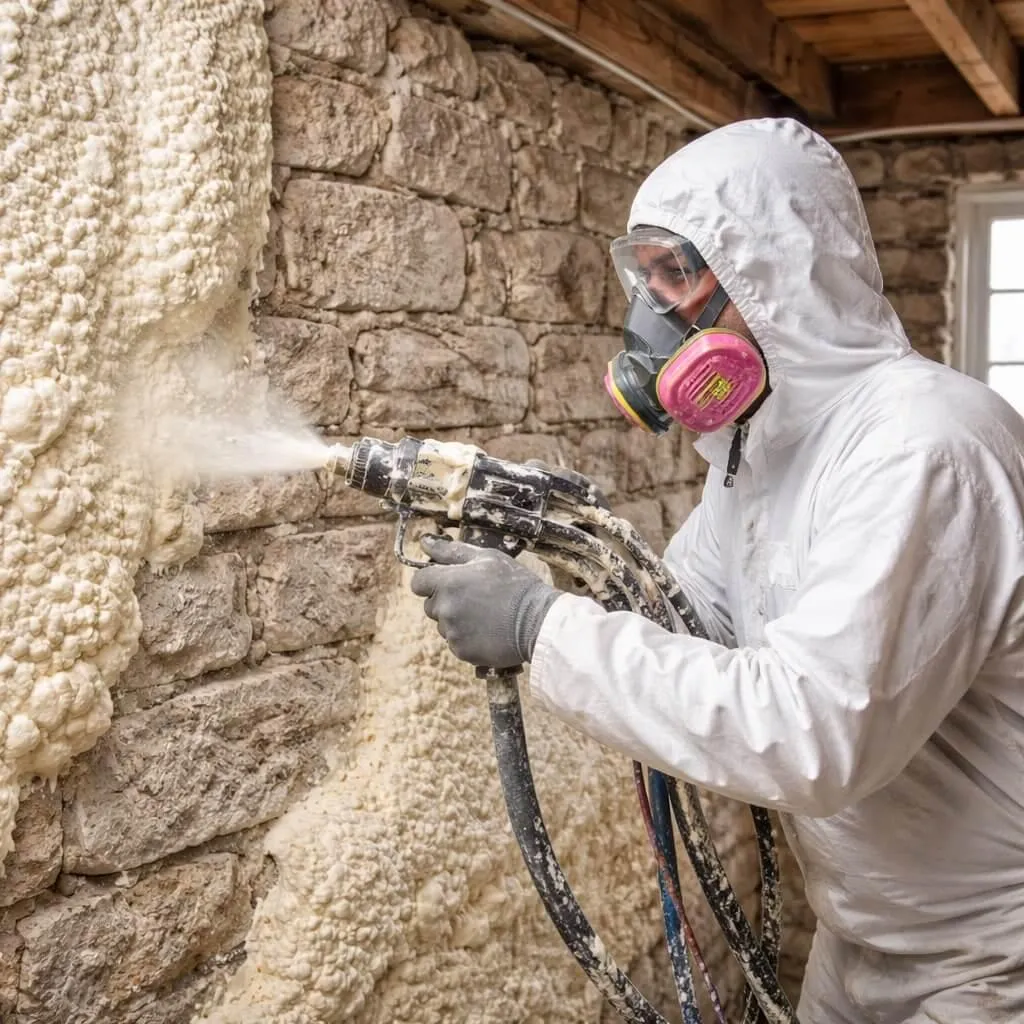
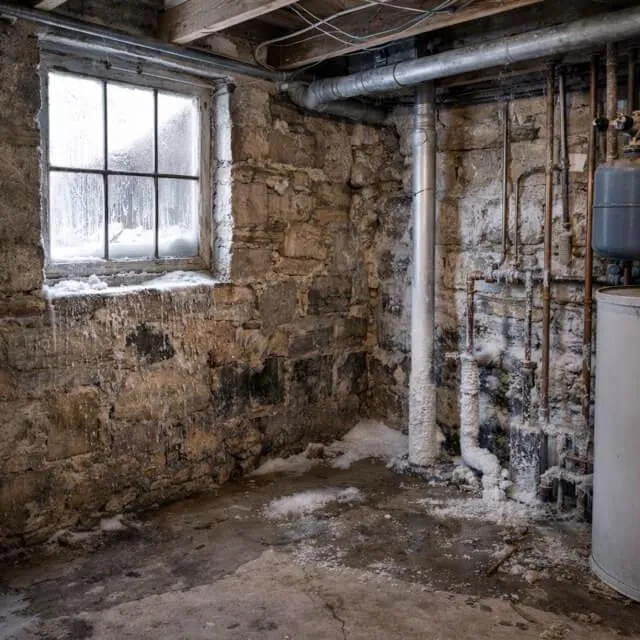
If there is one insulation product that deserves particular attention in the Greater Kingston area, it is spray polyurethane foam — and the reason comes down to the city's heritage housing. Kingston has one of the highest concentrations of pre-Confederation stone and brick buildings in English Canada. These homes were built in an era when "insulation" meant thick walls and a roaring fireplace, and their solid masonry construction presents a genuine challenge: you cannot blow insulation into a cavity that doesn't exist.
For limestone and solid-brick homes in the Williamsville, Sunnyside, and Sydenham neighbourhoods, interior spray foam applied to the warm side of exterior masonry walls is often the most practical upgrade path. Closed-cell spray foam adheres directly to the masonry surface, adding R-value without requiring a stud wall cavity, and it simultaneously seals the significant air leakage that older Kingston stone homes are notorious for. Air leakage — not just conductive heat loss — is often the dominant energy problem in these structures, and spray foam addresses both in a single application.
In new construction, spray foam earns its cost premium at the rim joist — the framing zone where the floor structure meets the foundation wall. Kingston's freeze-thaw cycles are intense, and rim joists left uninsulated are a reliable source of cold floors, pipe freeze risk, and moisture condensation. Closed-cell spray foam cut and cobbled, or applied directly, is the industry-preferred solution. It is also the product of choice for cathedral ceilings in the custom lakefront and rural properties common along the Rideau Lakes corridor and the shores north of Kingston toward Sydenham and Verona.
Rigid Foam Board: Continuous Protection for Foundations and Exteriors
Kingston's climate makes foundation insulation non-negotiable. The frost depth in this part of Ontario reaches roughly 1.2 to 1.5 metres, meaning the upper portion of any foundation is exposed to significant thermal stress every winter. Rigid extruded polystyrene (XPS) foam board is the standard product for insulating poured-concrete and block foundations from the exterior during new construction, wrapping the below-grade walls in a continuous, moisture-resistant thermal layer before backfilling.
On the interior, rigid foam board — either XPS or polyisocyanurate — is commonly applied to basement walls as part of a finished basement assembly. In Kingston's older housing stock, many homeowners finishing previously uninsulated basements find that a continuous layer of rigid foam against the concrete wall, followed by a stud wall, delivers better moisture management than batts stuffed directly against cold masonry. This is particularly relevant given Kingston's clay-heavy soils in parts of the west end, which can drive hydrostatic pressure and wall moisture issues that batts will absorb but rigid foam will resist.
On the exterior of above-grade walls, adding 1.5 to 2 inches of polyiso or EPS continuous insulation over the sheathing before cladding is a cost-effective step that can push a standard wood-frame wall from a code-minimum effective R-value up to something meaningfully more efficient — a worthwhile investment given that Kingston homes run their heating systems for five to six months of the year.
Blown-In Cellulose: The Right Answer for Kingston Attics
For attic insulation in both new construction and the vast renovation market that Kingston's aging housing stock generates, blown-in cellulose is frequently the most sensible choice. It installs quickly, conforms perfectly to the irregular framing and obstructions common in older Kingston homes, and reaches the R-50 to R-60 depths now required or strongly recommended in this climate zone without difficulty.
The sustainability angle resonates locally as well. Products like Ontario-made Climatizer cellulose, manufactured from recycled newsprint, align with the values of Kingston's environmentally conscious homeowner base, and the material's density provides modest acoustic and air-sealing benefits alongside its thermal performance. For the large number of 1950s to 1980s bungalows and two-storeys throughout Williamsville, Calvin Park, and Portsmouth that have under-insulated attics — a common finding in Kingston home energy audits — blown-in cellulose added over existing insulation is one of the fastest-payback upgrades available.
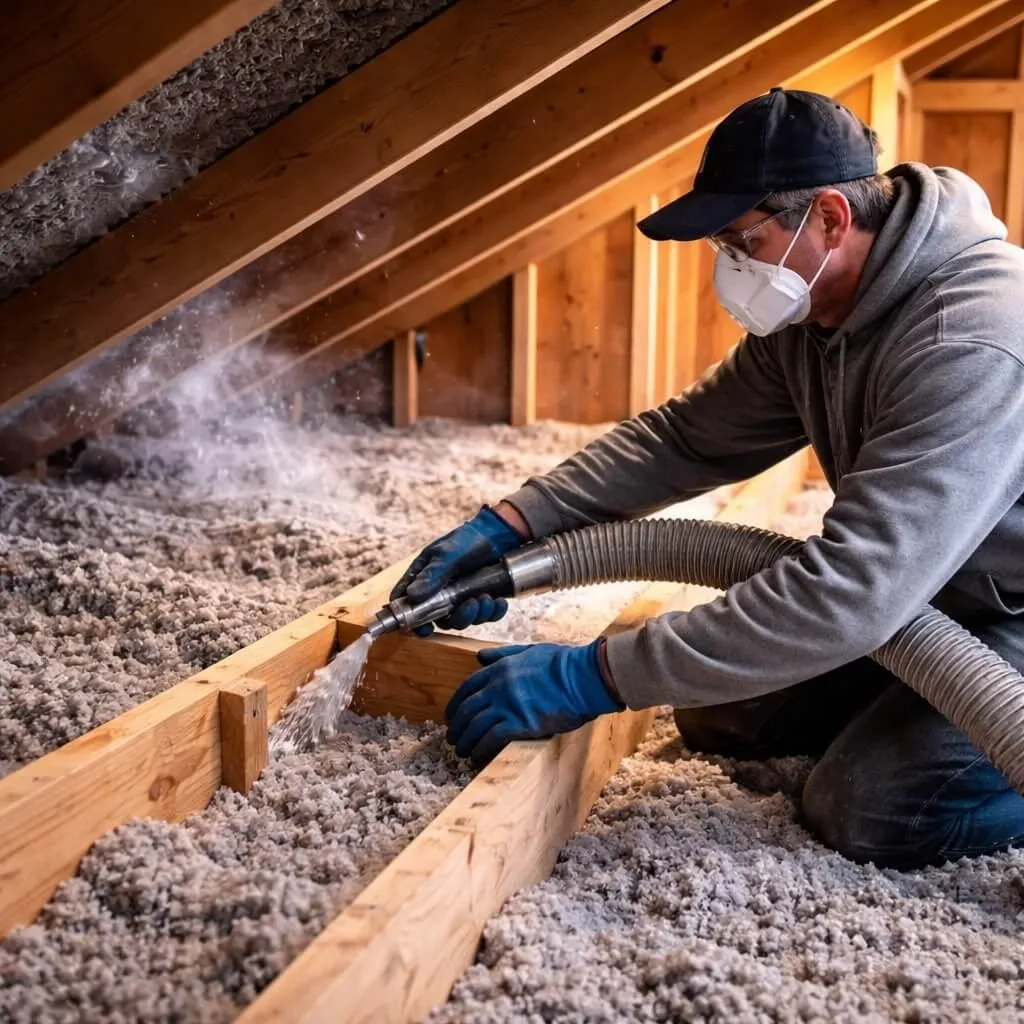
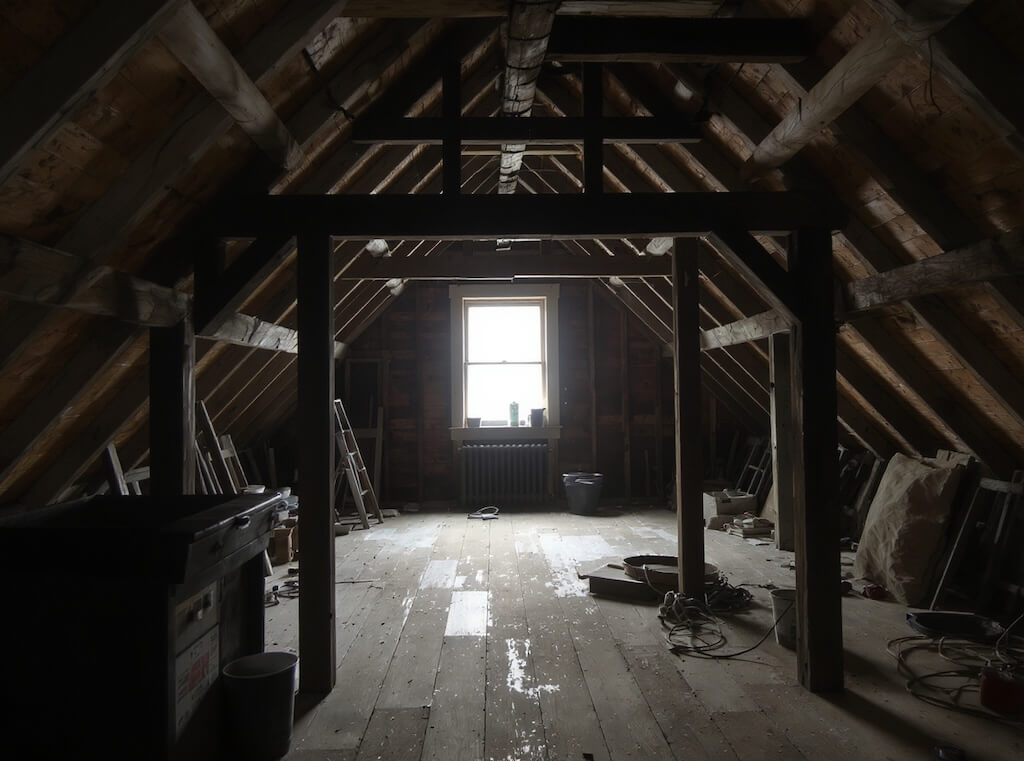
One local consideration: Kingston receives meaningful snowfall, and properly insulating and air-sealing the attic floor is critical to preventing ice damming on eaves. Ice dams form when heat escaping through a poorly insulated attic melts snow on the roof, which then refreezes at the cold eaves. A deep, well-installed blown-in cellulose layer combined with proper attic ventilation is the most reliable preventive measure for this common Kingston roofing problem.
Mineral Wool: Sound and Fire Separation in Kingston's Dense Neighbourhoods
Kingston's downtown and near-downtown neighbourhoods — Sunnyside, and the areas around Queen's University — are characterised by attached and semi-detached housing, converted multi-unit properties, and student rental homes where party walls separate multiple households. In these applications, mineral wool batts offer something fiberglass cannot match: simultaneous thermal, acoustic, and fire-separation performance.
The density of mineral wool allows it to dampen the airborne sound transmission that is a persistent complaint in Kingston's attached housing, while its inherent non-combustibility satisfies fire-separation requirements in the Ontario Building Code for party walls in multi-unit residential buildings. For any builder constructing townhouses, semi-detached homes, or secondary suites — an increasingly common project type as Kingston addresses its housing supply challenges — specifying mineral wool in shared walls is a straightforward way to meet multiple code requirements and deliver a noticeably quieter home to occupants.
Putting It Together for a Kingston Home
Greater Kingston's combination of a cold, humid Climate Zone 6 climate, heritage masonry housing, active new wood-frame construction, and a large stock of mid-century homes due for upgrades means no single insulation product dominates every situation. The best-performing homes in this region tend to use fiberglass batts in standard above-grade wall cavities, closed-cell spray foam at rim joists and in solid-masonry heritage walls, rigid foam board on foundations and as a continuous exterior layer, blown-in cellulose in attics, and mineral wool wherever acoustic or fire separation is required.
Given that Ontario is progressively tightening its energy code requirements, and that Natural Resources Canada's home energy programs increasingly reward airtight, well-insulated envelopes with rebate dollars, the economic case for doing this right — not just to minimum code — has never been stronger for Kingston homeowners and builders alike. A consultation with a local certified energy advisor before beginning any significant insulation work is time well spent in a city where the building stock is as varied as the climate is demanding.
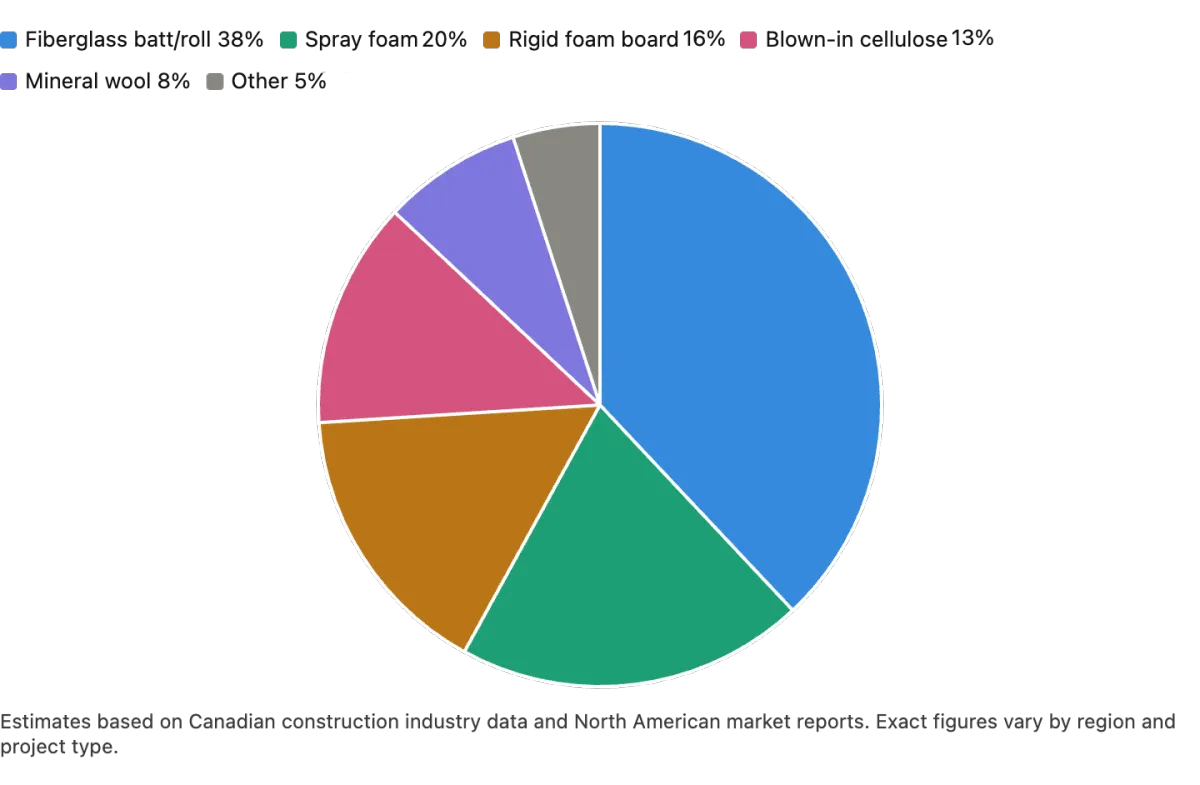
Percentage of Insulation Usage in Canadian Homes
Is your home losing heat, feeling drafty, or harder to keep comfortable?
Helping Kingston Homeowners





INSULATION SOLUTIONS
Heat Loss & Ice Dam Solutions
Heat Loss & Ice Dam Solutions
Drafty Rooms & Uneven Temperature
Cold Floors & Basement Comfort
Cold Floors & Basement Comfort
Drafty Rooms & Uneven Temperature
LINKS
This website is operated by Joe Ramsay and Associates Inc. We are not an insulation contractor. We provide information and connect homeowners with independent local service providers. We may receive compensation from service providers for introductions made through this site.